The Quiet Revolution of Monotype: Why One Print Is Worth More Than a Thousand Sketches
In a world that celebrates replication, monotype stands apart by refusing to be repeated. A single pull of paper from an inked plate produces an image that can never exist again in exactly the same form. That unrepeatable moment is not a limitation; it is the entire point.
Most printmaking techniques are built on the promise of editions: the comfort of knowing you can pull another print tomorrow if today’s goes wrong. Monotype throws that safety net away. There is no plate to preserve, no second chance for the ghost that lingers after the first impression. What you lift from the press is final, alive, and irrevocably yours.
This is why many painters secretly love monotype more than painting itself. A canvas can be scraped, repainted, abandoned. A monotype demands commitment the instant the paper touches the ink. Yet, paradoxically, that same finality dissolves fear. When you know there is no “correct” version waiting to be recovered, you stop trying to make the perfect image and start making an honest one.
The process feels almost ritualistic:
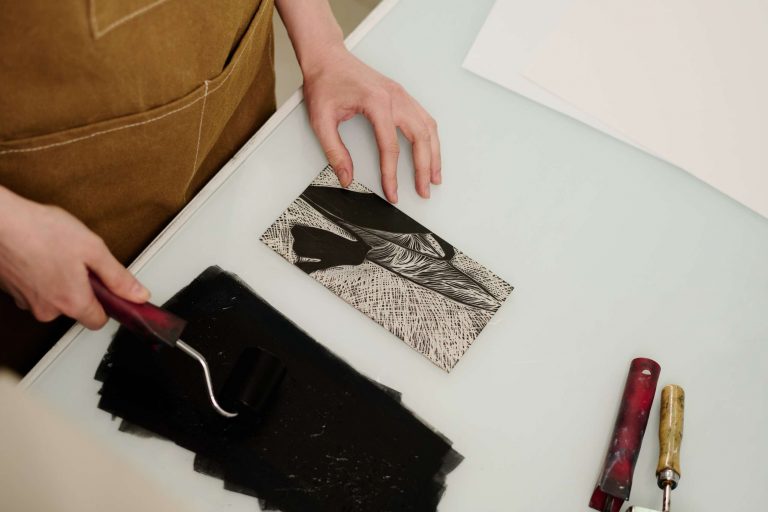
- You roll the ink with the same care you would give to spreading paint on a canvas.
- You draw, scratch, wipe, and press fingers into the wet surface exactly as intuition demands.
- You lay the paper down like a letter you will never be able to rewrite.
- Then comes the slow lift—the reveal.
In that single gesture, weeks of hesitation can dissolve. Painters who have spent years paralyzed by blank canvases often describe their first successful monotype as the moment they remembered why they fell in love with making marks in the first place.
There is also something deeply human about the ghost print—the faint second impression left on the plate. Most artists discard it. Others frame it beside the strong print because it tells the truth: everything vibrant casts a shadow, everything bold leaves a trace. The ghost is proof that intensity happened.
Monotype teaches a lesson no other medium can deliver so directly: letting go is not the same as giving up. When you accept that each print will live only once, you stop hoarding possibilities and start living inside the one that is happening right now.
That is the quiet revolution. Not a new tool or technique, but a shift in posture—from grasping to releasing, from perfecting to witnessing. One sheet of paper, one breath, one irreversible mark. And suddenly the world feels larger because your art finally belongs to the moment instead of the archive.
Next time you feel stuck, try this: cover a plate in black ink, close your eyes, and move your hands exactly as they want to move. Press the paper. Lift it. Look at what emerged without judgment.
You will not be able to make another one like it.